Hey everyone, if you’ve ever looked into Ferro Silicon (FeSi) for your manufacturing processes, you know there’s more to this alloy than meets the eye. As someone who’s been supplying FeSi to metalworking, steel production, and casting teams for over a decade, I get tons of questions from buyers who’re confused about the difference between granular and lump FeSi. It’s not just a size thing—there are actual performance, cost, and use case differences that can make or break your project. Let’s break this down like we chat over coffee at trade shows, no boring textbook jargon here. Ferro Silicon
First, let’s start with the basics for anyone new: Ferro Silicon is that key alloy made of iron and silicon (usually 75% or 90% silicon, depending on the grade) that’s used in steelmaking, casting, and even some chemical processes. It’s a deoxidizer, an alloying agent, and sometimes a source of silicon in specialized metals. The two main forms you’ll see are granular and lump, and picking the wrong one can lead to slower processing, higher waste, or even subpar final metal.
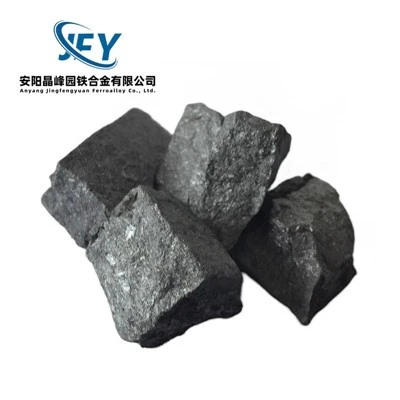
Let’s talk lump FeSi first because that’s the OG form. When we produce FeSi in our furnaces, when it cools down naturally, it forms big, solid chunks—think like 5cm up to 30cm in size, sometimes even bigger for specialty grades. When I’m explaining this to new buyers, I always say it’s just like a big ice cube vs. crushed ice, but for metal alloys. Now, what’s good about lump FeSi? It’s super dense, right? Because it’s a solid, monolithic chunk. That means it has a higher silicon content by volume, generally—wait, no, actually, the silicon percentage is set by grade (75% vs 90%), but the density is consistent. Because it’s not crushed, there’s less fine material (the dusty bits) that can get lost during handling. Less waste, which is a win for buyers.
But here’s the thing about lump FeSi: it’s not great for small, precise batches or processes where it needs to dissolve fast. Because it’s a big solid chunk, it takes longer to melt and mix into molten metal. If you’re making a small steel casting, for example, and you drop a 10cm lump into a tiny induction furnace, it’ll take forever to melt, and you might end up with uneven silicon distribution—some parts of the metal will have too much Si, others too little. That can cause defects in the final product, like brittleness or inconsistent hardness. Also, handling lump FeSi can be a bit trickier if you’re working with automated feeding systems—those big chunks can get stuck in hoppers or feed lines, so you might need someone standing by to unclog things, which adds labor costs.
Now, granular FeSi is the smaller, crushed version. We crush the cooled FeSi lumps into smaller pieces, usually ranging from 1mm up to 10mm (sometimes a bit bigger, but not over 15mm). The small size is a game-changer for a lot of processes. First, it dissolves way faster. The smaller surface area means it’s exposed to more molten metal at once, so it melts in minutes instead of 20+ like a big lump. That’s huge for high-volume steel mills that run 24/7—they don’t want to stop production waiting for FeSi to dissolve. Also, granular FeSi mixes way more evenly. If you’re adding it to a ladle of molten steel, the small pieces spread out, so every part of the metal gets the right amount of silicon. No more hot spots or inconsistent grades.
But granular FeSi has a downside: there’s more fine material (the bits under 1mm) that can be created during crushing and handling. Those fines are easy to blow away during transport or pouring, so you might lose 5-10% of your material before it even hits the metal. That adds up cost-wise, especially if you’re buying in tons. Also, if you’re using it in a process that needs very precise alloying (like making specialized stainless steel), those fines can mess with your Si levels because they’re so reactive—one wrong pour and your metal is off-spec.
Wait, but let’s get into the nitty-gritty of where each one shines, because that’s what most buyers actually care about. For lump FeSi, who uses it? Mostly large-scale steel mills with big arc furnaces. They have tons of space, automated systems that can handle big lumps, and they’re making thousands of tons of steel a day, so the slower dissolution time is offset by the lower waste (less fines lost). Also, if you’re making heavy structural steel (like for bridges or skyscrapers), you might use lump FeSi because it gives a more gradual silicon addition, which helps with deoxidation for large volumes. Another use case: some foundries that make big, heavy castings (like engine blocks for trucks) use lump FeSi because it can be added early in the melting process, and it doesn’t cause splashing when it hits the molten metal.
Granular FeSi? That’s for smaller foundries, precision steel producers, and any operation where speed and consistency matter. For example, if you’re a small job shop making custom steel parts in induction furnaces (which are usually 1-10 tons, not 100+), granular FeSi is perfect because it melts fast, so you can adjust your Si levels on the fly. Also, industries like aluminum casting sometimes use granular FeSi as a silicon source, because it mixes evenly with the lighter molten aluminum. Another big use is in the production of silicon alloys for the electronics industry, where every percentage point of silicon has to be exact—granular FeSi lets you meter it precisely into the melt without unevenness.
Now, let’s talk about cost, because that’s a huge factor for every buyer. Generally, granular FeSi is a bit more expensive per ton than lump FeSi—wait, why? Because crushing and screening the material adds processing steps. We have to run it through crushers, sifters, and dust collection systems to get the right size, so that extra work gets passed on. But wait, don’t just look at the per-ton price—look at the effective cost. If you use granular FeSi and dissolve it faster, you get more consistent product, less rework for defects, so your overall production cost goes down. But if you use lump FeSi in a process that needs fast dissolution, you might have to hold up production, which costs way more than the difference in material price. I’ve had buyers come to us saying they saved $10k a month by switching from lump to granular because their production downtime dropped by 2 hours a day.
Another thing a lot of buyers don’t ask about: quality control. Both forms of FeSi have to meet strict standards for silicon content, carbon, sulfur, and other impurities, right? But when we screen granular FeSi, we can test each size batch to make sure the fines are within a certain limit (usually less than 5% for most grades). For lump FeSi, since it’s a solid chunk, we can test individual lumps but there’s less need for constant screening because there’s less fine material. Wait, but here’s a pro tip from our team: we actually do a mix for some buyers. If a steel mill has an automated system that can handle both, we’ll send a blend of small lumps (10-20cm) and granular, so they get the density of lump but faster dissolution than a big 30cm chunk. It’s a middle ground that works for a lot of operations.
Wait, let’s address some common misconceptions. I hear all the time: “Granular is always better because it’s smaller.” No way. If you’re making a 50-ton heat of steel, adding granular FeSi would cause too much rapid melting, which can create splashing in the furnace—That’s a safety hazard, and you could lose a bunch of molten metal. The big dense lump dissolves slower, so it doesn’t cause that splashing. Another misconception: “Lump has higher silicon.” No, the silicon content is determined by the grade (75% FeSi is 75% silicon, 25% iron, no matter if it’s lump or granular). The size doesn’t change the alloy composition, just the physical properties. That’s a key point I always make sure new buyers understand.
As someone who’s been in this game for years, I’ve seen buyers make mistakes because they didn’t ask the right questions. Last year, a small foundry owner came to us upset because he bought lump FeSi from another supplier, and his castings had 20% more defects than usual. Turns out, he was using a 50kg induction furnace, so the big lumps couldn’t melt evenly, leading to inconsistent silicon levels. We switched him to 3mm granular FeSi, and his defect rate dropped to almost zero. That’s the difference: matching the form to your process.
Now, what about storage and transport? Lump FeSi is easier to stack, right? Those big chunks don’t take up as much space by volume—1 ton of lump FeSi takes up less space than 1 ton of granular, because the small granular pieces have air gaps between them. So if you have limited storage space, lump might be better. But if you’re using automated feeding systems that rely on precise metering, granular is easier because you can use a volumetric feeder to dispense exact amounts, whereas a lump feeder is more complicated. Also, in humid environments, both forms can react with moisture to release small amounts of hydrogen, which can cause porosity in metal. But granular has more surface area, so it’s a bit more reactive with moisture, so you have to store it in sealed, dry containers. Lump, with less surface area, is a bit more forgiving if you have minor humidity issues.
Let’s wrap this up for anyone who’s still trying to pick which one is right for them. If you’re a large-scale steel mill with big furnaces, automated lump handling, and need low waste, lump FeSi is your guy. If you’re a small to medium foundry, precision steel producer, or need fast melting and consistent alloying, granular FeSi is the way to go. And if you’re somewhere in between, ask your supplier about a custom blend—we’ve done that for tons of clients, and it works like a charm.
Here’s the thing: I’m not here to push one form over the other. As a supplier, my job is to help you get the FeSi that fits your process, not just sell you whatever’s in stock. I’ve had clients stay with us for years because we take the time to ask about their furnace size, production speed, defect rates, and storage, then recommend the right form. Too many suppliers just sell you the cheapest option, but that’s not helpful for your bottom line.
If you’re still unsure which form is best for your operation, or you want to talk about custom grades or blends, don’t hesitate to reach out. We know metal production can be stressful, and having the right materials is half the battle. Just send over the details of your process—what kind of metal you’re making, the size of your furnaces, your daily production volume—and we can break down the pros, cons, and cost for you. No sales pitch, just straight talk, like we’ve been doing for years with our clients.
Alloy References:
- ASM International. (2005). Ferroalloys: Production, Processing, and Applications. ASM Handbook, Volume 15: Casting.
- World Steel Association. (2022). Deoxidization and Alloying Practices in Modern Steelmaking.
- The Foundry Society. (2021). Material Selection for Casting Alloys and Additives.
- U.S. Geological Survey. (2023). Mineral Commodity Summaries: Silicon and Ferrosilicon.
Anyang Jingfengyuan Ferroalloy Co., Ltd.
As one of the most professional ferro silicon manufacturers and suppliers in China, we’re featured by quality products and good price. Please rest assured to buy bulk ferro silicon in stock here and get quotation from our factory. We also accept customized orders.
Address: Longquan Town Industrial Park, Long’an District, Anyang City, Henan Province
E-mail: Jingfengyuan@jfyferroalloys.com
WebSite: https://www.jfy-ferroalloy.com/
