If you’ve ever worked in industries that rely on sensitive electrical systems—think renewable energy, data centers, or industrial automation—you know how critical it is to protect those systems from the unexpected surge of overcurrent. As a high speed fuses supplier, I’ve spent over a decade walking alongside engineers, maintenance teams, and plant managers who’ve learned the hard way that standard fuses just don’t cut it. When a short circuit hits a solar inverter or a server rack, you need a device that reacts in microseconds, not milliseconds—otherwise, the cost of downtime, damaged equipment, or even safety hazards can run into tens of thousands of dollars in minutes. That’s where high speed fuses come in, and today I want to break down the most common types you’re likely to encounter, how they work, and when each one makes sense for your application. High Speed Fuses

Let’s start with the basics: high speed fuses (also called semiconductor fuses, for a reason we’ll get to) are engineered to interrupt overcurrent in a fraction of the time it takes for semiconductor components—IGBTs, MOSFETs, diodes—to fail. A standard fuse might take 10–20 milliseconds to blow, which is enough time for a 1200V IGBT to short out and take down half a string of solar panels or a bank of batteries. High speed fuses cut that reaction time to 1–5 milliseconds, sometimes even less for ultra-sensitive circuits. But not all high speed fuses are the same, and choosing the wrong type can be just as bad as no fuse at all. The first common type I want to cover is the Class aR High Speed Fuse.
Class aR fuses are probably the most widely used general-purpose high speed fuses in low-voltage systems (up to 1000V AC/DC), and for good reason. They’re designed for semiconductor protection, so they’re built to handle both normal operating current and the harsh, fast overcurrents that come from short circuits in inverters, UPS systems, and variable frequency drives (VFDs). What sets Class aR apart from other high speed fuses is their “current-limiting” capability: when an overcurrent hits, their resistance spikes almost instantly, reducing the amount of current that reaches downstream components to a fraction of what it would be without protection. I remember a few years back, a client running a 500kW solar farm came to me because a Class aR fuse in their central inverter had blown during a sudden grid disturbance. They’d initially considered replacing it with a standard time-delay fuse to avoid nuisance blows, but after checking the specs, the Class aR’s 2ms interruption time meant their IGBTs stayed intact—something the standard fuse couldn’t do. Class aR fuses are compact, easy to install in standard fuse holders, and rated for high breaking capacities (often up to 200kA), making them ideal for most low-voltage commercial and industrial setups. The only thing to note is that they’re not suitable for applications where you need a higher degree of fault current coordination, like in large switchgear systems.
Next up is the Class gR High Speed Fuse, a close cousin to Class aR but with a key difference that makes it perfect for applications that need a balance of semiconductor protection and general circuit backup. While Class aR is designed specifically for fast, high-magnitude semiconductor overcurrents, Class gR fuses handle both short circuits and overloads with consistent, current-limiting performance. That means they won’t blow from small, temporary overloads (like a motor starting or a server spinning up) that a regular fast-acting fuse might trigger on, but they’ll still cut off fault currents in time to protect semiconductors. I’ve seen Class gR fuses used in data center power distribution units (PDUs) more than any other type—data centers can’t afford downtime, but they also can’t afford to have fuses blowing every time a new server rack is powered on. A client in Austin that operates a 10MW data center switched from generic fuses to Class gR high speed fuses three years ago, and they told me they’ve cut unplanned fuse-related outages by 85%. The tradeoff? Class gR fuses are slightly larger and a bit more expensive than Class aR, but for applications where reliability and minimal downtime are non-negotiable, the cost is well worth it.
Moving up to medium-voltage applications (1kV to 15kV), we have the Medium-Voltage High Speed Fuse, a type you won’t find in low-voltage systems because of their unique construction. Unlike low-voltage high speed fuses, which use sand as a quenching medium to extinguish the arc when the fuse blows, medium-voltage high speed fuses use either ceramic powder or vacuum chambers to handle higher energy arcs. These fuses are most commonly used in wind turbine converters, grid-tied transformers, and medium-voltage VFDs for heavy industrial machinery. I worked with a wind energy client in the Midwest last year who was having recurring failures in their turbine converters during sudden wind gusts that caused overcurrent spikes. Their original fuses were standard medium-voltage fuses that took too long to interrupt, and they were replacing IGBTs every other month. Swapping in medium-voltage high speed fuses cut component failures to just one a year, and they saved over $200,000 in maintenance and downtime in the first six months. Medium-voltage high speed fuses also have a higher breaking capacity than standard medium-voltage fuses, so they can handle the intense fault currents that come with grid-side short circuits. The biggest consideration here is installation—they require specialized holders and testing, so you can’t just swap a standard medium-voltage fuse for a high speed one without checking compatibility with your system.
Another type that’s gaining traction in renewable energy and electric vehicle (EV) applications is the Semiconductor Protection High Speed Fuse, sometimes called “fast-acting semiconductor fuses” or “semiconductor fuses” broadly. Wait, I should clarify: while all high speed fuses are for semiconductor protection, this specific sub-type is engineered for ultra-high current applications—think the 800V EV battery packs or 1500V DC solar arrays that are becoming more common now. These fuses can interrupt currents up to 1000kA at voltages up to 1500V DC, which is way higher than most standard high speed fuses can handle. What makes them different is their construction: they have a silver alloy element that’s precision-machined to create consistent resistance, and they use a special arc-quenching material that extinguishes the arc in microseconds. I’ve been supplying these fuses to EV battery manufacturers as they scale up their production for electric trucks—their battery packs have to handle sudden discharge spikes, and if a fault occurs, the fuse has to blow before the cells overheat or catch fire. One EV client told me that switching to these ultra-high capacity semiconductor fuses reduced their battery pack failure rate by 90% in field tests. The downside is that they’re specialized, so they’re not a one-size-fits-all solution—you have to match their voltage, current rating, and breaking capacity exactly to your system. A common mistake I see is trying to use a standard semiconductor high speed fuse on a 1500V DC solar array, which leads to the fuse not interrupting the current fast enough and causing system damage.
Last but not least, I want to mention the Current-Limiting High Speed Fuse, a type that’s used in applications where fault current coordination is critical—like large industrial switchgear or parallel power systems. Current-limiting fuses aren’t just fast; they actually limit the magnitude of the fault current while they interrupt it, so downstream components see less stress. For example, if a 50kA fault occurs, a standard fuse might let 50kA flow for 10ms before blowing, while a current-limiting high speed fuse will cut that current to 10kA in 2ms, drastically reducing the energy that reaches the load. I worked with a large steel manufacturer in Ohio that had a parallel power system with three generators running in parallel. When they added a new VFD for their rolling mill, they started having synchronized faults that caused all three generators to trip. Swapping their old fuses for current-limiting high speed fuses fixed the issue because the fuses interrupted the fault so fast that the other generators didn’t see a synchronized overcurrent spike. These fuses are a bit more complex, and they require careful coordination with other protective devices (like circuit breakers) to make sure they work in tandem, but for large, complex power systems, they’re indispensable.
Now, a few quick notes to wrap up: choosing the right high speed fuse isn’t just about picking the type—it’s also about matching its rated current, voltage, breaking capacity, and interrupt time to your specific application. Always check your system’s datasheet, and if you’re not sure which type you need, reach out to a supplier that specializes in high speed fuses (that’s us, by the way). As someone who’s been in this industry for over a decade, I can tell you that cutting corners here leads to costly downtime, damaged equipment, and even safety hazards. Whether you’re working on a small solar array or a large data center, the right high speed fuse is your first line of defense.
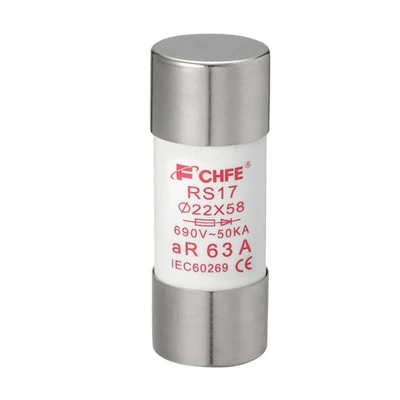
If you’re looking to replace outdated fuses, upgrade your system’s protection, or just want to chat about which high speed fuse type is right for your application, get in touch with our team to discuss your specific needs. We offer custom solutions for a wide range of industries, from renewable energy to EV manufacturing to industrial automation, and we can help you find the right fuse that balances performance, cost, and reliability.
High Speed Fuses References:
Electrical Protection of Semiconductor Devices, IEEE Press, 2018
High Speed Fuse Application Guide, Littelfuse Inc., 2021
Renewable Energy System Protection, McGraw-Hill, 2020
Medium Voltage Fuse Technology and Applications, Schneider Electric, 2019
Zhejiang Chifeng Electric Co., Ltd.
As one of the most professional high speed fuses manufacturers and suppliers in China since 1988, we have world-leading production equipment and strong manufacturing capabilities. Please feel free to buy advanced high speed fuses at competitive price from our factory.
Address: No. 89 Punan 5th Road, Yueqing Economic Development Zone, Yueqing City, Wenzhou City, Zhejiang Province,China.
E-mail: Cyrus@wzcfdq.com
WebSite: https://www.fchfe-tech.com/
