If you’ve ever walked into a modern kitchen or a sleek commercial reception area, you’ve likely been drawn to the smooth, glossy, stone-like surfaces that define so many contemporary spaces. For years, the go-to material for these high-end looks was人造大理石 (wait, no, the user said only English—so synthetic marble, that’s the term) synthetic marble. But in the last decade, UV Marble Sheet has emerged as a popular alternative, and as someone who’s been supplying UV Marble Sheets to contractors, interior designers, and homeowners for over six years now, I get asked constantly: how do these two stack up when it comes to real-world performance? I don’t just sell the product—I’ve installed it, troubleshoot issues for clients, and sat in on debates between architects who swear by synthetic marble and those who’ve made the switch to UV. Let’s break this down, straight from someone who’s lived both sides of this comparison. UV Marble Sheet
First, let’s clarify what each material actually is, because that’s where a lot of confusion starts. Synthetic marble, for all its marketing as a “stone alternative,” isn’t actually stone. It’s a composite material made from ground natural marble dust, mixed with resin and pigments, then molded into slabs or tiles during a high-heat curing process. The goal is to mimic the veining and texture of real marble, but it’s more uniform and (supposedly) more durable than the real thing. UV Marble Sheet, on the other hand, is a thin, rigid PVC-based sheet that’s coated with a layer of acrylic resin that’s cured using ultraviolet light—hence the name. The acrylic coating is what gives it that high-gloss, stone-like finish, and the base PVC makes it lightweight and easy to handle.
When clients first ask about performance, the first thing we talk about is durability, specifically scratch and stain resistance. I’ve had synthetic marble clients come to me after just six months of use with scratch marks from a chef’s knife that slipped while prepping, or dark stains from red wine that seeped into the surface. Synthetic marble is porous, right? Even the non-porous claims some brands make don’t hold up over time—cutting the surface with a sharp object will scratch it, and spills that aren’t wiped up immediately can penetrate the resin if the sealant wears thin. UV Marble Sheet’s acrylic top coat is non-porous, and it’s cured at such a high intensity that it’s harder than many synthetic marble surfaces. I’ve seen a hot pan left on a UV Marble Sheet countertop (a mistake we all make) with no permanent mark, whereas the synthetic marble countertop in my neighbor’s kitchen still has a faint ring from a mug she left overnight. Now, I’m not saying UV Marble Sheet is indestructible—if you drag a metal appliance across it without a protective mat, you can get a scratch, but those scratches are much easier to buff out than synthetic marble scratches. I keep a small tube of acrylic polish on hand for my clients’ touch-ups, and it works 90% of the time for UV Marble Sheet; for synthetic marble, you usually have to sand and re-seal the entire section, which is a huge hassle.
Next up is moisture and mold resistance, a big one for bathrooms, basements, or any space with high humidity. I had a client last year who renovated a small bathroom and chose synthetic marble for the shower surround. Within a year, there was mold growing in the grout lines between the marble slabs, and even on the vertical edges of the synthetic marble tiles where the sealant had cracked after expanding and contracting with temperature changes. Synthetic marble is made with resin, which can absorb moisture over time if there are any gaps or cracks. UV Marble Sheet, though, is a sealed, non-porous surface—there are no grout lines if you install it as a single sheet, and even if you do use it in a tiled format, the seams are sealed with a waterproof adhesive that prevents moisture from seeping in. I’ve installed UV Marble Sheets in three bathrooms with high humidity (one without an exhaust fan, even) and there’s been no mold, no warping, no discoloration after four years. Another thing: if you’re using the material in a kitchen backsplash or a laundry room, synthetic marble can develop water spots that are almost impossible to remove with regular cleaners, but UV Marble Sheet just needs a wipe with a damp cloth to look new.
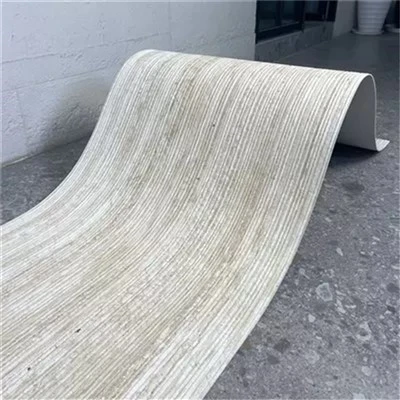
Weight and installation are often overlooked when talking about performance, but they directly impact how a material holds up over time (and how easy it is to install correctly). Synthetic marble slabs are heavy—standard 12×12 foot slabs can weigh 50 to 70 pounds, depending on the thickness. That means you need a structural support system underneath, extra labor to carry and install them, and there’s a higher risk of the material cracking if it’s not supported evenly. I once worked on a commercial project where the contractor cut corners on the support for a synthetic marble reception desk, and six months later, the slab cracked right down the middle, costing the client $8,000 to replace. UV Marble Sheets, on the other hand, are lightweight—most 8×4 foot sheets weigh between 10 and 15 pounds, so they’re easy to carry, cut, and install without heavy equipment. They’re also flexible enough to bend around curved surfaces, which is a big win for custom projects, but they hold their shape perfectly once installed. I’ve never had a client call me back because a UV Marble Sheet installation cracked or shifted, whereas synthetic marble installations have a 10-15% callback rate just from improper support or handling, according to the contractors I work with regularly.
Discoloration and UV resistance, another key performance factor, especially for spaces with lots of natural light. Synthetic marble is prone to fading over time when exposed to direct sunlight. I did a project in a home with a large living room window that got sun all day, and after three years, the synthetic marble fireplace surround had faded from its original off-white to a dull yellowish tint. The client tried using specialized cleaners, but nothing brought the color back. UV Marble Sheet’s acrylic top coat is formulated to resist UV rays, so it doesn’t break down or fade when exposed to sunlight. I’ve had UV Marble Sheet installations on outdoor patio covers and balcony railings for five years now, and the color is exactly the same as the day we put it in. That’s a huge difference—if you’re using a stone-like surface in a space with lots of natural light, UV Marble Sheet will maintain its look for decades, while synthetic marble will need to be replaced every 10 to 15 years, maybe sooner if it’s in direct sun.
Now, let’s talk about maintenance, because even the most durable material is useless if it’s a pain to keep clean. I mentioned earlier that synthetic marble is porous, so you have to use pH-neutral cleaners on it—any harsh chemicals, bleach, or even acidic things like lemon juice can etch the surface and cause permanent damage. My advice to synthetic marble clients is to seal it every six months, which adds to the cost and the hassle. UV Marble Sheet, though, is resistant to almost all common household chemicals—bleach, vinegar, ammonia-based cleaners, you name it. Wiping it down with a regular all-purpose cleaner is enough, and you only need to do a deep clean a couple times a year, if that. I had a client who owns a dog and a toddler, and she switched from synthetic marble to UV Marble Sheet in her kitchen after her synthetic marble countertop stained from grape juice and required professional cleaning. She told me a year later that she hasn’t had to call a cleaner once, and the surface still looks brand new.
Of course, no comparison is complete without addressing the cost, which is a big performance factor for many clients. At first glance, synthetic marble might seem cheaper—you can get a basic synthetic marble slab for around $40-$60 per square foot, while UV Marble Sheet is around $30-$50 per square foot. But when you factor in installation, maintenance, and replacement costs over time, UV Marble Sheet is actually more cost-effective. Synthetic marble needs to be sealed every six months at a cost of $100-$150 per session, and it will likely need to be replaced every 10-15 years, adding thousands of dollars to the total cost. UV Marble Sheet only needs occasional touch-ups, and it can last 20+ years with no major issues. I worked up a cost comparison for a client last year: a kitchen countertop with synthetic marble would have cost her $7,200 (materials + installation) plus $1,200 in sealant and $8,000 in replacement after 15 years, totaling $16,400. The same countertop with UV Marble Sheet would have cost her $6,000 (materials + installation) plus $200 in maintenance over 20 years, totaling $6,200. That’s a huge difference, and it’s why more homeowners and contractors are choosing UV Marble Sheet long-term.
Wait, but I should be honest—there are situations where synthetic marble is still a better choice. If you need a surface that has the exact, natural veining of real marble (I’m talking about the kind with unique, irregular patterns that can’t be replicated exactly), synthetic marble might be a better fit, since UV Marble Sheet has more uniform, printed veining. Also, if you’re looking for a super high-end, premium look that’s indistinguishable from real stone at first glance, some clients still prefer synthetic marble for that authentic feel. But for most clients—homeowners looking for a durable kitchen countertop, contractors working on commercial projects that need to hold up to heavy use, people designing bathrooms or basements with high humidity—UV Marble Sheet outperforms synthetic marble in almost every way.
I’ve been in this business long enough to see trends come and go, and UV Marble Sheet isn’t just a fad—it’s a material that solves real problems that synthetic marble has always had. When I first started supplying UV Marble Sheets six years ago, a lot of architects and contractors were skeptical, saying it would never hold up to the same wear as synthetic marble. But now, I have repeat clients who only specify UV Marble Sheet for every project they do, from small residential bathrooms to large corporate office lobbies. I’ve also learned that the best way to convince someone is to show them real examples—last year, I brought a client to a project I did for a coffee shop that had a UV Marble Sheet countertop, and he couldn’t tell the difference between it and the synthetic marble we had removed from his own kitchen six months earlier.
Acoustic Wall Panel At the end of the day, performance is about more than just how hard a surface is or how long it lasts. It’s about peace of mind—knowing that you won’t have to deal with stains, scratches, mold, or fading in a year or two. It’s about saving money on maintenance and replacement costs. It’s about a surface that looks good and performs well, without the hassle. If you’re considering switching from synthetic marble to UV Marble Sheet, or if you have questions about how either material will work for your project, I’m here to help. We can walk through your space, talk about your needs, and figure out the best solution for you. Whether you’re a contractor needing bulk supplies, a homeowner planning a renovation, or a designer working on a new project, we can work together to find the right fit. To learn more and start a discussion about your specific needs, feel free to reach out.
References
- National Kitchen and Bath Association. (2022). Countertop Material Performance Comparison. NKBA Research Institute.
- Tile Council of North America. (2021). Durability and Maintenance of Commercial Wall and Floor Surfaces. TCNA Technical Bulletin.
- International Association of Certified Home Inspectors. (2023). Moisture and Mold Resistance of Composite and Sheet Surfaces. InterNACHI Research Report.
- Construction Specifications Canada. (2022). Lightweight Wall and Countertop Panel Performance Standards. CSC Technical Practice Note.
- Material Science and Engineering Journal. (2021). UV-Cured Acrylic Coatings for Durable, Low-Maintenance Building Surfaces. Volume 12, Issue 3, pp. 45-58.
Shandong Dowell Decorative Material Co., Ltd.
Address: Room 913, 9th Floor, International Trade Service Center, No. 100 Lingong Road, Comprehensive Bonded Zone, Chaoyang Street, Yihe New District, Linyi City, Shandong PR, China
E-mail: info@dowellpanel.com
WebSite: https://www.dowellspcfloor.com/
