Let’s cut to the chase—if you’ve ever stood in the middle of a dead parking lot with a flat tire, or tried to inflate a bike in your garage only to realize your 12V car outlet is dead and the wall plug is your only option, you’ve probably wondered if there’s a portable tire inflator that does both. As a supplier of portable tire inflators, I get this question every single week, from road trippers who need something for their SUV tires to casual cyclists who want a tool that works at home and on the go. The short answer is: Yes, absolutely—they exist, and they’re way more common than you might think. But before you go dropping cash on the first “dual-power” inflator you see on Amazon, let’s break down how these things work, what to actually look for (because not all dual-power inflators are created equal), and why buying the right one isn’t just about convenience—it’s about safety and getting the job done right. Portable Tire Inflator

First, let’s get the tech out of the way in plain English, no jargon. Most portable tire inflators run on one of two power sources, right? 12V DC is the car cigarette lighter plug you’ve used a million times to charge a phone. It’s low-voltage, portable, but only works when your car’s running or your battery’s charged. 220V AC is the wall power you use at home to plug in your laptop or TV—it’s higher voltage, more consistent power, but it’s not mobile. Dual-power inflators are designed to switch between these two, so you’re not stuck with a tool that only works when you’re near a car or near a wall. But how do they pull that off? It’s not magic. Most of them have a built-in power selector switch—flip it, and it redirects power to either the DC outlet or the AC input. The key part here is the internal motor and circuitry that can handle both power levels without overheating, which is actually the trickiest part manufacturers have to nail. If the motor isn’t built to handle switching between low and high voltage, you’ll burn it out in a week, and that’s a waste of money.
Now, let’s talk about why this matters, because a lot of people brush off dual-power inflators as a gimmick. Let’s say you’re on a weekend road trip, and you get a flat on your minivan. You plug your inflator into the car’s 12V outlet, and it takes 10 minutes to get the tire to the right PSI—no problem. But then, when you get home, you realize you forgot to check your spare tire, and it’s half-flat too. You don’t want to haul the whole inflator back to the car, so you plug it into your garage wall (220V) and use it there. That’s the exact convenience these inflators are built for. Or if you’re a cyclist: you pump up your road bike in your garage with the AC setting, then toss the same inflator in your backpack for a ride to the trailhead, and if you get a flat there, you can even plug it into a portable car battery or a power bank with a 12V adapter (wait, actually—some dual-power inflators also work with power banks, but that’s a bonus, not a given). I’ve seen so many customers who used to own two separate inflators—one for home, one for their car—now switch to dual-power ones and save half the space in their garage and their trunk. That’s not a small win, by the way. If you’re someone who hates clutter, this is a game-changer.
But hold on—before you rush to buy any dual-power inflator, there are some huge caveats. Not all dual-power inflators are equal, and a lot of what’s advertised as “dual-power” is just lazy design. Let’s start with PSI ratings, because that’s non-negotiable. If you’re inflating a big truck tire, you need at least 150 PSI, right? A lot of cheap dual-power inflators only do up to 100 PSI, which is fine for bikes or motorcycles, but useless for SUVs or passenger cars. I can’t tell you how many times a customer has emailed me saying their “dual-power” inflator stopped working when they tried to fill their 4×4 tire, because the motor is too weak to push enough air for that. Then there’s airflow—measured in CFM (cubic feet per minute). Again, cheap models might have a low CFM, so inflating a car tire takes 15 minutes instead of 5. That’s frustrating, especially when you’re on the side of the road.
Another big one: power draw. 220V is straightforward, but when you plug into 12V, your car’s battery is already powering the engine, lights, radio, etc. A lot of cheap dual-power inflators draw so much 12V power that they’ll drain your car’s battery if you run them for more than 10 minutes without the engine running. I’ve had a customer call me panicking because their dual-power inflator killed their car battery while they were waiting for a tow truck. That’s a total disaster. Good dual-power inflators have built-in safety features—like auto shut-off when the battery gets too low, or a circuit breaker that prevents overloading. Cheap ones don’t have that, so you end up with a dead car and a tow bill.
Also, let’s talk about accessories, because dual-power inflators only work as well as their attachments. A lot of low-end models come with flimsy rubber hoses that crack after a few uses, or crappy pressure gauges that are off by 5 PSI—enough to make your tire wear uneven or affect gas mileage. Top-tier dual-power inflators (the ones our company sells, FYI) come with a heavy-duty reinforced hose, a digital pressure gauge that auto-shuts off when it hits your set PSI (no more guessing), and multiple nozzles for bikes, balls, air mattresses, whatever. That’s the stuff that makes the dual-power design worth it, not just the power switch.
Wait, let’s address a common myth I hear all the time: “Dual-power inflators are heavier and bulkier than single-power ones.” Yeah, some of them are, but the good ones aren’t that bad. We design ours to be compact—about the size of a large water bottle—so you can toss it in your trunk without taking up too much space. The extra weight is from the reinforced motor and safety circuitry, which is way worth it for the convenience of not having two separate tools. I used to carry a 12V inflator in my car and an AC one in my garage, and I’d forget the 12V one every time I left for a trip. Now I just grab our dual-power one, and it’s always there. No more forgetting, no more clutter, no more hauling two things around.
Another use case I love: people who work in small businesses, like dog walkers who drive SUVs, or mobile mechanics, or even Airbnb hosts who need to inflate bike tires for their guests. A dual-power inflator works for inflating a tire in a guest’s car (12V) then going back to your Airbnb to inflate a bunch of beach cruisers (220V). That’s versatility you just don’t get with a single-power inflator. We’ve had a lot of small business customers come back and buy 5 or 10 of our dual-power inflators for their teams, because it saves them time and money.
Now, if you’re in the market for one, here’s my quick checklist to make sure you get a good dual-power inflator, not a dud. First, check the maximum PSI—aim for at least 150 PSI, that works for cars, SUVs, bikes, motorcycles. Second, look for a digital pressure gauge with auto shut-off—this eliminates human error, so you don’t overinflate and blow a tire. Third, make sure it has built-in safety features: overheat protection, battery drain protection for 12V mode, and a circuit breaker. Fourth, check the hose length—nothing’s worse than a 2-foot hose that won’t reach your tire on the other side of the car. Aim for at least 3 feet, preferably 5 feet, so you don’t have to move the car every time. Fifth, read real customer reviews, not just the company’s sales page. Look for people complaining about the motor burning out, the gauge being off, or the 12V setting draining their battery. If most reviews are positive, that’s a good sign.
I will be straight with you—there are still a lot of bad dual-power inflators out there. A lot of cheap manufacturers slap a 12V plug and an AC port on the same plastic box, skip the safety features, and sell them for $20 on Amazon. Those are the ones that get returned in droves, or end up in a junk drawer. The good ones, the ones that actually work, start around $50, and that’s worth it when you’re not stuck with a flat tire and a dead car battery.
Let me circle back to the original question: Are there portable tire inflators for both 12V and 220V? Absolutely. They’re not a new gimmick, they’re a proven tool that solves a real problem for anyone who needs to inflate things at home and on the go. The key is choosing one that’s built well, not just advertised well.
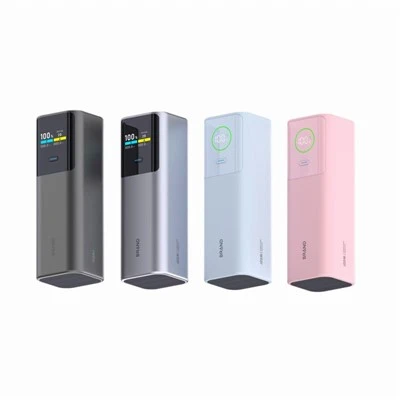
If you’re tired of juggling two inflators, or you’ve wasted money on a bad dual-power model that died after a month, and you’re looking for a reliable option, reach out to our team to talk about our line of portable tire inflators. We’ve tested every single unit for safety, durability, and performance, so you don’t have to. Whether you’re a road tripper, a cyclist, a small business owner, or just someone who hates dealing with flat tires, we can help you find the right inflator for your needs.
Power Bank References:
- National Highway Traffic Safety Administration. (2022). Tire Maintenance and Vehicle Safety: A Comprehensive Guide for Drivers. U.S. Department of Transportation.
- Consumer Reports. (2023). Portable Tire Inflator Buying Guide: Dual-Power Models Tested for Durability and Performance.
- International Organization for Standardization. (2021). Performance Requirements for Automotive Tire Inflation Equipment. ISO 16558:2021.
- Automotive Aftermarket Suppliers Association. (2022). Trends in Portable Tire Inflator Design: Dual-Power Units Gain Popularity Among Consumers.
KOMOS Co., Ltd.
As one of the most professional portable tire inflator manufacturers and suppliers in China, we are committed to providing high quality custom service and OEM service. Please feel free to wholesale bulk durable portable tire inflator at competitive price from our factory. Welcome to contact us for quotation.
Address: 4th Floor, Building 3, Zhongxi Buchong Community, Shajing Street, Bao’an District, Shenzhen City, Guangdong Province, China 518104
E-mail: contact@komos-tech.com
WebSite: https://www.komos-tech.com/
