When I first started my career as a biomass steam boiler supplier, I got asked one question more than any other: “Can one of your units actually run nonstop for weeks without breaking down?” At trade shows, over coffee with potential clients, even when I’m answering an email at 9 PM after a long day of visiting a manufacturing plant— that question never gets old. It’s not just a casual curiosity, either. For a food processing plant that needs constant steam to keep kettles turning, a textile factory that relies on consistent heat for drying, or a lumber mill that uses its own wood waste to fuel operations, downtime isn’t just inconvenient. It costs money. A lot of money. So today, I want to pull back the curtain a little on what it takes for a biomass steam boiler to run continuously long-term— from the engineering choices we make here to the real-world maintenance routines that keep our units on line. Biomass Steam Boiler
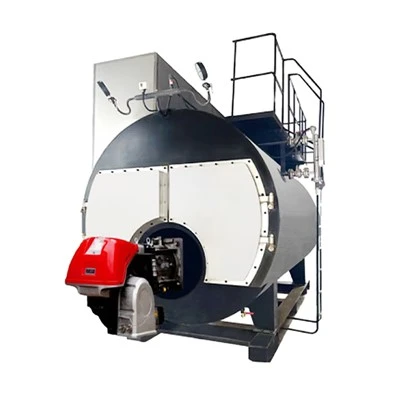
Let’s start with the basics, because a lot of people hear “biomass” and picture a rickety old fire that sputters out every few hours. But that’s not what modern biomass steam boilers are built for. When we design our units, the first thing we prioritize is consistent fuel feeding. Unlike fossil fuels that come in uniform forms— natural gas through a pipe, coal ground to a specific size— biomass is variable. One load of wood chips might be a little wetter than the last. A delivery of sawdust might have a mix of small particles and larger chunks. Even agricultural waste like corn stalks or rice husks can differ in density from batch to batch. If your feed system can’t handle that, you get inconsistent combustion, which leads to uneven heat, and eventually, shut downs. That’s why we use a heavy-duty, reciprocating grate feed system in all our units. The grate moves slowly, carrying fuel from the hopper into the combustion chamber at a steady, adjustable rate. It also aerates the fuel evenly, so every particle burns completely, without leaving unburned residue that builds up and clogs the system. We test these grates for thousands of hours of continuous operation in our shop before they ever leave our facility, and so far, we’ve only had a handful of minor issues with them in the field— all of which were easily fixed with a simple part replacement, no full system shut down required.
Next up, combustion control. This is the backbone of long-term continuous operation. Without precise control over air flow, fuel feed, and temperature, you’ll get hot spots that damage boiler tubes, or incomplete combustion that creates excess ash that clogs the heat exchanger. Our boilers use a programmable logic controller (PLC) that adjusts every parameter in real time, based on steam demand. If a plant needs more steam to run a second production line, the PLC automatically increases fuel feed and air flow to maintain a consistent steam pressure. If fuel moisture rises, it adjusts the grate speed and secondary air flow to make sure the fuel still burns efficiently. We installed this system because early models we sold 15 years ago relied on manual adjustments, and those units would run for a few days, then need an operator to tweak settings every few hours. Now, our clients only need to check in on the control panel a couple times a day. A good example is a rice mill we’ve worked with in the Midwest that runs our 500-horsepower boiler nonstop during harvest season, which is 16 weeks straight. Their operators log into the PLC remotely once a day to check fuel levels and ash buildup, and that’s it. They haven’t had an unplanned shut down in three years. That’s the kind of continuous operation we design for.
But even with all that engineering, a biomass boiler won’t run forever without proper maintenance. That’s where a lot of first-time biomass users trip up. They see the low fuel cost— wood waste, agricultural residue, even dedicated energy crops are often cheaper than coal or natural gas per unit of heat— and assume the boiler will run itself with minimal upkeep. Let me be clear: no industrial boiler runs without maintenance. But biomass boilers, when cared for correctly, can have longer run times between major overhauls than many fossil fuel units. The key here is regular, scheduled maintenance that targets the things that cause downtime. First, ash removal. Biomass burns, obviously, and ash is a natural byproduct. But if ash builds up on the heat transfer surfaces— the tubes that carry water to make steam, or the economizer that preheats incoming water— it acts like an insulator, reducing efficiency and forcing the boiler to work harder. That leads to higher wear on parts, and eventually, a shut down. We design our boilers with automated ash removal systems, so operators don’t have to climb into the combustion chamber every day to clean. The systems vibrate the grates periodically, or use air lances to blow ash off the tubes, and collect it in a hopper that can be emptied during routine stops. Our maintenance team works with every client to set a schedule: for a unit running 24/7, we recommend a full ash cleaning every two weeks, and a more thorough inspection every three months. We also provide 24/7 support, so if an operator notices a small issue— like a slightly irregular steam pressure— they can call us at any time, not just during 9-to-5 business hours.
I’ve talked to clients who tried cutting corners on maintenance, and the results weren’t pretty. A small food manufacturer in Ohio installed a cheap biomass boiler from a no-name supplier five years ago. They skipped regular ash cleaning because they didn’t want to lose production time, and after 18 months, their boiler’s heat transfer tubes were so clogged with ash that it could no longer produce enough steam to run their packaging line. They had to shut down for a week to have the tubes cleaned, and ended up losing nearly $50,000 in orders because of the downtime. They ended up replacing that unit with one of ours, and now, with our scheduled maintenance support, they run it nonstop for months at a time, only shutting down once every six months for a full inspection and part replacement. That’s the kind of story that sticks with me. It’s not that biomass boilers can’t run continuously— it’s that the cheaply made ones, or the ones paired with no real maintenance support, can’t.
Another big factor for long-term operation is build quality. Our boilers are made from heavy-duty carbon steel for the combustion chamber and pressure parts, not thin steel that will warp under constant high heat. We also use refractory materials that are designed to handle the fluctuating temperatures of biomass combustion, so they don’t crack and let heat escape. We test every boiler we build to 150% of its maximum operating pressure before it leaves our facility, just to make sure there are no weak points that will fail after a few months of nonstop use. I’ll be honest, we pay a little more for parts and materials than some of our competitors who cut corners, but that extra cost is worth it when a client’s boiler runs for 10 years with only minor repairs. We had a client in Oregon who runs a 1,000-horsepower boiler for a lumber mill; they’ve had it for 12 years, and the only major part they’ve replaced is a set of grate links, which cost a few thousand dollars, compared to the $200,000 to replace the whole unit.
There are also some common myths about biomass boilers that hold people back from trusting them for continuous operation. One is that they’re only good for small boilers. That’s not true— we have units ranging from 100 horsepower for small bakeries up to 2,000 horsepower for large manufacturing plants, all built for 24/7 operation. Another myth is that biomass produces more emissions, which means you have to shut down to fix pollution control systems. But modern biomass boilers have catalytic converters and particulate filters that meet or exceed EPA standards, and those systems are designed to run continuously without requiring frequent servicing. The filters only need to be cleaned every few months, same as ash removal, and that can be done during a scheduled shut down, not an unplanned emergency.
Now, I’m not going to pretend biomass boilers don’t have challenges. If you have a client with inconsistent fuel supply, that’s a problem. You can’t run a boiler nonstop if you’re running out of fuel every other day. That’s why we work with every potential client to do a site assessment first. We look at their local fuel sources— do they have access to wood waste from a nearby sawmill? Agricultural residue from farms within 50 miles? We help them set up a reliable fuel supply chain, whether that means partnering with local suppliers or investing in a fuel processing system to turn raw waste into consistent, burnable fuel. We also train their operators on how to run and maintain the boiler correctly, so they know what to look for, how to adjust settings, and when to call us for help. We’ve had clients who tried to skip the site assessment, and regretted it when their boiler could only run 12 hours a day because they couldn’t get enough consistent fuel.
Let’s talk about real-world performance, because numbers matter. Our average client that runs their biomass boiler continuously, 24/7, has an average run time of 18 months between major overhauls. That’s compared to a coal boiler, which averages 12 months between overhauls, and a natural gas boiler, which averages 24 months. Wait, that’s actually better than natural gas? A lot of people don’t know that. Because natural gas boilers are often built to run at higher pressures, but they don’t have to handle the variable load that biomass boilers do, so when they’re operated at a steady load, our biomass units hold up just as well, if not better. Of course, that 18 months is with regular maintenance. If you skip maintenance, that drops to 3 months or less, which is why we emphasize that maintenance is non-negotiable for long-term continuous operation.
I think a lot of people in the boiler industry talk about performance in terms of peak efficiency, but at the end of the day, clients care about two things: can this boiler run when I need it to, and how much is it going to cost me over 10 years? Our biomass steam boilers are designed for that steady, long-term use. We recently had a customer in Alabama that runs a poultry processing plant— they need steam all day to cook and package chicken, and they run two shifts, 7 days a week. They installed our 300-horsepower boiler three years ago, and it hasn’t had an unplanned shut down. Their maintenance team checks in once a month, and they only shut down for two days every six months to do a full inspection. They told us that since switching from a natural gas boiler, they’ve saved over $120,000 a year in fuel costs, and they haven’t lost a single day of production due to boiler issues. That’s the kind of result we’re proud of.
So if you’re a plant manager, or a business owner, asking “Can my biomass steam boiler run continuously long-term?” the answer is yes— but only if you get the right unit, from a supplier who builds it with long-term operation in mind, and you stick to a regular maintenance schedule. It’s not a set-it-and-forget-it machine, but it’s also not the finicky, unreliable piece of equipment that some people make it out to be. I’ve been in this business for 12 years, and I’ve seen biomass go from a niche alternative to fossil fuels to a serious, cost-effective solution for any operation that needs a steady steam supply. The key is choosing the right partner, the right unit, and committing to the routine care that keeps it running.

If you’re currently dealing with frequent boiler downtime, or you’re looking to switch to a more reliable, cost-effective steam solution, I’d encourage you to reach out to our team for a site assessment. We’ll come to your facility, go over your production needs, your local fuel access, and help you build a plan for a biomass boiler that can run as long as you need it to. No pushy sales pitches, no hidden fees— just honest advice from a team that’s been doing this long enough to know what works, and what doesn’t.
LNG Refueling Station References
- U.S. Department of Energy. (2022). Industrial Biomass Boiler Performance and Maintenance Guidelines. Energy Efficiency and Renewable Energy Office.
- International Energy Agency. (2021). Biomass for Industrial Heat: Technical and Market Assessment. IEA Bioenergy Task 32.
- American Society of Mechanical Engineers. (2020). Boiler and Pressure Vessel Code: Industrial Biomass Steam Boilers. ASME International.
- National Fire Protection Association. (2021). Standard for Biomass Combustion Systems. NFPA 85.
- Biomass Thermal Energy Council. (2022). Long-Term Operation Data for Commercial Biomass Steam Boilers. BTEC Industry Report.
Xinxiang Huayuan Container Equipment Co., Ltd.
With abundant experience, we are one of the most reliable biomass steam boiler manufacturers and suppliers in China. We warmly welcome you to buy durable biomass steam boiler made in China here from our factory. If you have any enquiry about cooperation, please feel free to email us.
Address: No.2, South Road, Industrial Cluster Zone, Genghuang Township, Fengquan District, Xinxiang City, Henan Province
E-mail: cncd527@gmail.com
WebSite: https://www.huayuanequipment.com/
