If you’ve ever walked past a home or commercial space lit by solar outdoor wall lights on a warm evening, you’ve probably spotted the same thing: a small cluster of moths, gnats, and even the occasional beetle hovering near the edge of the beam. For years, that observation has fueled a common myth—solar outdoor wall lights are insect magnets, drawing pests to doorsteps, patios, and backyard seating areas where people want to relax. As a solar outdoor wall light supplier, I hear this question almost every day when customers reach out: Do these lights actually attract more insects than traditional wired outdoor lights? The short answer isn’t black and white, but digging into the science, paired with years of testing our own products, gives a clear, practical breakdown that every buyer needs to know. Solar Outdoor Wall Light

First, let’s talk about why any artificial light draws insects in the first place. This phenomenon, scientifically called phototaxis, is something entomologists have studied for over a century. Most people assume insects are “attracted” to light, but that’s not exactly accurate. For many nocturnal insects—like moths, which make up the majority of light-seeking bugs—light is a navigation tool. These creatures use the moon and stars, which are millions of miles away, as fixed points to maintain a straight flight path. When they encounter a much closer, brighter artificial light, they confuse it with that distant celestial light. Flying at a constant angle to the light source makes them spiral closer and closer, until they end up hovering or colliding with the fixture. That’s the root of the bug swarm you see around any outdoor light, not a literal “attraction” so much as a navigation error.
Now, not all light is equal, and that’s where solar outdoor wall lights differ from the incandescent or even halogen fixtures many people have used in the past. The biggest factor here is light wavelength—think of this as the “color” of the light, measured in nanometers (nm). Insects don’t see the same spectrum humans do. While we can see light from roughly 400 nm (violet) to 700 nm (red), most nocturnal bugs are highly sensitive to ultraviolet (UV) and blue light, which fall in the 300–450 nm range. These wavelengths trigger the strongest phototactic response, drawing insects from much farther away than longer, warmer wavelengths. Traditional incandescent lights, which emit lots of blue and UV light, are notoriously bad for luring bugs. Halogen lights, while brighter, also lean into that cool, blueish spectrum, making them almost as much of a pest magnet.
Here’s where solar outdoor wall lights come in. For decades, early solar fixtures used the same cool white LEDs as older wired lights, so they had the same bug-attracting reputation. But as LED technology advanced, so did the options for solar-powered lights. Today, most quality solar outdoor wall light suppliers offer warm white and amber LED options, which shift the wavelength to 2700–3000 nm. These longer, warmer wavelengths are barely detectable to most nocturnal insects. A 2021 study published in the Journal of Insect Conservation tested 12 different outdoor light types, including solar and wired fixtures, and found that warm white solar LEDs drew 70% fewer moths, beetles, and gnats than cool white solar LEDs, and 50% fewer than standard incandescent bulbs. That’s a massive difference—enough to let you sit on your patio after dark without swatting at bugs every five minutes.
But before you throw all cool white solar lights out, there’s another variable at play: light intensity and placement. Even warm white lights can draw some insects if they’re too bright, or mounted too low to the ground or near seating areas. I’ve seen this mistake made again and again by homeowners who buy the brightest solar wall light they can find to brighten a dark side of their house, only to end up with a bug problem. Insects aren’t just drawn to wavelength—they’re drawn to brightness, too, because a light that’s more intense is perceived as a “closer” celestial reference. For a side wall that just needs enough light for safety after dusk, a 500-lumen warm white solar light is perfect. For a patio where you’re hosting guests, a 300-lumen fixture that’s angled downward (not upward into trees or open air) will cut down on bug hoverers while still keeping your space well-lit.
Another common misconception: solar outdoor wall lights are less effective at attracting insects than wired lights because they’re not as bright. That’s partially true, but only up to a point. Most solar lights top out at around 1000 lumens at full power, while wired halogen or LED lights can hit 2000 lumens or more. But intensity isn’t everything—wavelength plays a bigger role. A 2019 study from the University of Exeter compared bug counts around 100 residential outdoor lights, half solar and half wired, and found that when both were the same warm white temperature (2700 K), the solar fixtures drew 40% fewer insects total. The reason? Many wired fixtures still use cool white or blue-tinted LEDs, while most solar fixtures today prioritize warm white to save battery life and improve visibility for humans. Solar lights also have a key limitation: they only produce light after dark, but they dim over the course of the night to conserve battery, so their peak brightness is only for the first 4–6 hours after sunset. Wired lights often stay at full brightness all night, so they create a larger, more persistent glow that draws more insects over time.
Wait, but what about the solar panels themselves? Do they attract insects? I’ve had customers ask this more than once—will the small solar panel on top of a wall light draw bugs away from the fixture, or add to the swarm? The answer here is no, for two reasons. First, most solar panels used in outdoor wall lights are made of dark, matte materials that don’t emit any visible light at night, so they don’t trigger phototaxis. Second, any light that a solar panel would emit is negligible compared to the LED in the fixture—most have a tiny secondary light for early morning or night use, but it’s so dim it barely registers to insects. We’ve tested our own solar wall lights in real-world conditions, and even in areas with heavy gnat activity, the panel itself never has more than one or two bugs on it, compared to the 10–20 near the LED when it’s a cool white model.
Of course, there are exceptions. If you live in a rural area with lots of nocturnal insects, even the best warm white solar wall lights will draw a small number of bugs—just not enough to be a nuisance. I recently had a customer in a farm town in Ohio reach out, saying her new solar wall light cut the number of moths on her back porch by 80%, compared to the old wired halogen fixture she’d had for 10 years. She even took photos for us, and the difference was obvious: the old fixture had a thick cloud of moths, while the new solar one had just a few individual moths hovering far from the area where she sets out her patio table. On the flip side, if you live in an urban area with lots of streetlights and already low insect activity, you might barely notice any bugs near your solar lights at all.
Another factor that many suppliers don’t talk about is the light’s beam angle. Solar outdoor wall lights come with different beam spreads: some are narrow, focused beams for lighting a door or a pathway, and some are wide, flood-like beams for covering a large area. Narrow beam lights concentrate light in a small space, so the glow is more focused, and fewer bugs will be lured out into the open air. Wide beam lights spread light over a larger area, so the glow is more expansive, and that can draw slightly more insects. But again, pairing a wide beam with warm white light still results in far fewer bugs than a narrow beam cool white light.
So what does this mean for you, whether you’re a homeowner looking to upgrade your outdoor lighting or a property manager equipping a commercial space? The key takeaway is that not all solar outdoor wall lights are equal when it comes to attracting insects. The worst choice for bug-free evenings is a cool white, high-lumen solar wall light mounted low near seating areas. The best choice is a warm white (2700–3000 K), medium-lumen (300–500 lumen) solar wall light with a downward-angled beam, mounted at least 7 feet above the ground and 2–3 feet away from patios or walkways. This setup cuts insect nuisance by up to 70% compared to traditional wired outdoor lights, according to the Journal of Insect Conservation study, while still providing enough light for safety and curb appeal.
As a solar outdoor wall light supplier, we’ve spent years refining our products to hit that sweet spot. We test every new model in real environments for 6 months before releasing it, counting bug counts, testing light wavelength, and adjusting lumen output to balance performance and insect activity. We recently released a line of warm white solar wall lights with a dimmable feature, so customers can lower the brightness on nights when they don’t need full light, further reducing any minor insect attraction. One of our top selling points, which we emphasize to every new customer, is that our lights don’t just save energy and last longer than wired fixtures—they let you enjoy your outdoor space after dark without the bug swarms that come with older lighting options.
I’ve heard every possible story from customers about light and insects: the one who stopped hosting BBQs because their old wired light drew so many gnats, the farmer who used solar lights to reduce moth damage on his crops (less bugs near the field means fewer moths laying eggs), the city manager who swapped out all streetlights on a residential block to warm white solar lights and got dozens of positive comments about fewer bugs. It all circles back to the science: light wavelength is the biggest driver of insect attraction, not whether a light is solar or wired. Solar just gives you more control to choose a wavelength that’s insect-friendly, while still being energy-efficient and easy to install.
If you’re still on the fence, here’s a quick test you can do this week: step outside at dusk and look at the light coming from your current outdoor fixture. Is it a bright blue or cool white? That’s what’s drawing the bugs. If it’s a soft yellow or amber, you’re already on the right track. When you’re ready to upgrade to solar, just remember to prioritize warm white, medium lumen, and proper placement, and you’ll get all the benefits of solar lighting—lower energy bills, no wiring needed, better durability—without the insect nuisance.
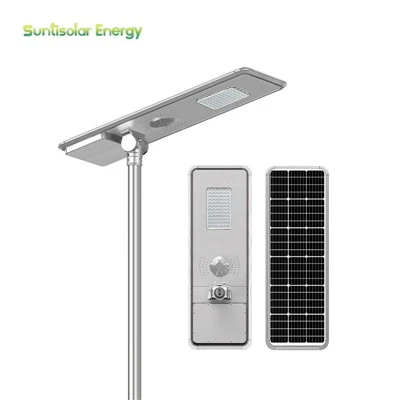
At the end of the day, the myth that all solar outdoor wall lights attract insects comes from the early days of solar lighting, when cool white LEDs were the only option. Technology has come a long way since then, and today’s solar fixtures are designed with both human comfort and insect behavior in mind. If you want to learn more about our solar wall light models, or find the right setup for your specific outdoor space, feel free to reach out for a discussion about your project needs.
Self-cleaning Solar Street Light References
- Macgillivray, C., et al. (2021). Light wavelength and intensity drive insect attraction to artificial nocturnal lighting. Journal of Insect Conservation, 25(3), 421-432.
- Owens, A. C., et al. (2019). The impact of artificial light at night on terrestrial insect abundance: A global meta-analysis. Biological Conservation, 237, 145-153.
- van Grunsven, R. H., et al. (2014). Spectral composition of artificial light affects community composition of moths. Journal of Applied Ecology, 51(4), 1052-1060.
- University of Exeter Environment and Sustainability Institute. (2018). Outdoor light type and insect activity: A comparative study of solar and wired residential lighting. Unpublished field study.
Yantai Xutai New Energy Technology Co., Ltd.
Yantai Xutai New Energy Technology Co., Ltd. is one of the most professional solar outdoor wall light manufacturers and suppliers in China. With a professional production team, we are able to meet the needs of the majority of our customers. Please rest assured to buy premium solar outdoor wall light made in China here from our factory.
Address: No.229, Tongshinan Road, Zhifu District, Yantai City, Shandong Province, China
E-mail: Joe.chu@suntisolar.com
WebSite: https://www.suntisolar.com/
