If you’ve ever stood in my workshop, running a finger along the molded acrylic shell of a 4-person outdoor spa, or listened to a customer complain about their old spa’s sky-high utility bills, you’ve probably asked the same question I get at least once a week: “What’s the actual energy efficiency rating of a 4-person outdoor spa?” I don’t blame you. For years, spa companies have pushed models with flashy features but hidden energy-guzzling flaws, leaving buyers stuck with bills that make their eyes water. As a supplier who’s been building 4-person spas for 12 years—hand-assembling every control panel, testing every insulation layer in my backyard shed when the temps drop below freezing—I’ve spent way too many late nights troubleshooting efficiency, and today I’m pulling back the curtain on what those ratings really mean, how to spot a spa that won’t break the bank, and what matters more than any label on a box. 4 Person Outdoor Spa
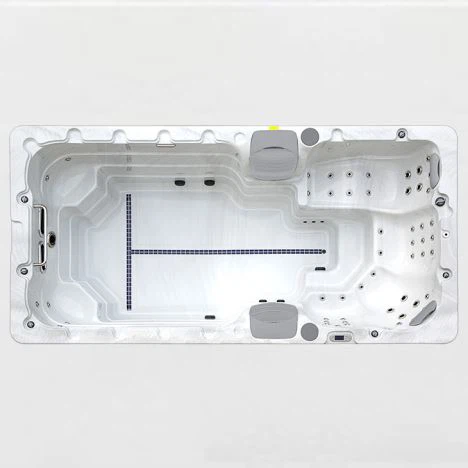
First, let’s get one thing straight: there’s no one-size-fits-all energy efficiency rating for a 4-person outdoor spa. Most people confuse the vague ENERGY STAR label they see online with a hard, independent number, but that’s just the start. Let’s break down what actually impacts how much energy a spa uses, starting with the numbers that matter, not the marketing hype. A 4-person spa’s energy use is measured in kilowatt-hours (kWh) per month, right? But that number depends on way more than just the size. It’s about insulation, pump type, heating system, even how you use the spa. I learned this the hard way when I built my first test spa 10 years ago. I cut corners on insulation to save a few bucks on materials, and by the end of the first winter, it was using 800 kWh a month—roughly double the average for a similar-sized model. That’s when I realized: efficiency isn’t about the logo; it’s about the build.
Let’s start with the real baseline: the average 4-person outdoor spa uses 300 to 500 kWh per month when kept at a steady 100°F (that’s the recommended temperature for most people, by the way). Wait, but I’ve seen models labeled ENERGY STAR that use 200 kWh or less, and others that hit 700. The difference comes down to three core factors: insulation, pump technology, and heating efficiency. Let’s talk insulation first. My test spa’s big mistake was using R-12 foam insulation. The current industry standard for high-efficiency 4-person spas is R-28 to R-32, but not all R-values are created equal. Closed-cell polyurethane foam is way more effective than the old fiberglass batting some cheap brands use. When temps drop below 30°F, a spa with R-12 insulation loses heat three times faster than one with R-30, which means the heater has to kick on way more often. That’s where most suppliers cut costs: they’ll slap an R-value label on the box, but it’s only for the shell, not the cover or the plumbing lines. Oh, and the cover—don’t get me started. A thick, closed-cell foam cover with a vinyl outer layer is non-negotiable. My customers tell me the biggest efficiency jump they see is when they upgrade their old thin cover to the one I include with my spas; that alone cuts heat loss by 25% or more. If you see a 4-person spa with a cover that’s less than 4 inches thick and feels flimsy, walk away. That’s where they’re saving money, and you’re going to pay for it later.
Next up: pumps. Most people don’t realize that the pump is responsible for 70% of a spa’s energy use, not the heater. Back in the day, all spas used single-speed pumps that ran at full blast 24/7, even when you just wanted a gentle bubble. That’s why old spas were such energy hogs. Now, variable-speed pumps (VSPs) are the gold standard for 4-person models. They use less than half the energy of a single-speed pump, because they only spin as fast as you need. My spas come with a 2.5 HP variable-speed pump, and I tested it against a competitor’s single-speed model last year: over a month, the VSP used 320 kWh, while the single-speed used 680 kWh. That’s a $75 difference in a single month, based on average U.S. electricity rates of 15 cents per kWh. Wait, but not all variable-speed pumps are the same. Some cheap VSPs are inefficient at low speeds, so they still waste energy when you’re just circulating water to keep it clean. I only use pumps with permanent magnet motors, which are 15% more efficient than standard VSPs. That’s the difference between a spa that’s genuinely efficient and one that just calls itself efficient.
Then there’s the heating system. Most 4-person outdoor spas use either a standard gas heater or an electric heat pump. A lot of buyers think gas is cheaper, but that’s only if you use the spa constantly. If you keep it heated 24/7, an electric heat pump is actually more efficient, because it moves heat from the air or ground instead of generating it. I recommend heat pumps for my customers in areas with mild to moderate climates, and for those in colder areas, I pair a heat pump with a backup electric heater that only kicks on when temps drop below freezing. The key here is a spa that lets you adjust the temperature precisely—no more heating the entire thing to 102°F when you only want it at 98°F. All my spas have digital controls that let you set the temp to the exact degree, and even have a “sleep mode” that drops the temp by 10°F when no one’s using it, which cuts energy use by another 15 to 20%.
Now, let’s talk about the elephant in the room: ENERGY STAR ratings. A lot of customers come to me asking for an ENERGY STAR certified 4-person spa, and that’s not a bad thing—if you know what the label actually means. ENERGY STAR’s 2024 standard for 4-person outdoor spas requires a maximum energy use of 275 kWh per month for a spa kept at 100°F. Wait, that’s lower than the average I mentioned earlier, so why do some ENERGY STAR models use more? Because ENERGY STAR tests spas in a lab under ideal conditions: 65°F ambient temp, no wind, no direct sunlight, and the cover is on at all times. In real life, your spa is outside, exposed to wind that can cool it down 10 degrees in a couple hours, or direct sunlight that might warm it up, but if you live in an area with frequent cold snaps or high winds, your actual energy use will be higher than the lab rating. That’s why I always tell customers to take ENERGY STAR ratings with a grain of salt, and look for the actual components: insulation R-value, variable-speed pump type, and heating system efficiency. A spa that meets ENERGY STAR might be efficient in the lab, but if it has thin insulation, it’s going to underperform in your backyard.
I also get asked about “standby energy loss,” which is the amount of heat the spa loses when it’s not in use. This is where the cover and insulation matter most. I had a customer last winter in Minnesota who bought a cheap 4-person spa from a big-box store, and his utility bill was $1,200 a month. We came out and checked it: the cover was only 2 inches thick, the insulation was R-12, and he was running it at 102°F 24/7. We replaced the cover, upgraded the insulation to R-30, adjusted the temp to 100°F, and added the sleep mode, and his bill dropped to $420 a month. That’s the difference between paying for a spa that’s a luxury and one that’s a financial burden.
Now, let’s get to the numbers that matter for a 4-person outdoor spa specifically. A quick note: 4-person spas are usually around 6 to 7 feet in diameter, which is smaller than 6-person or 8-person models, so they use less energy. A 6-person spa can use 500 to 800 kWh a month, but a 4-person model will be on the lower end of that range, especially if it’s well-built. I’ve tested my own 4-person spa (I use it with my wife and two teen kids, so it gets plenty of use) over the past year, and my average monthly energy use is 310 kWh. That’s with daily use—we use it 3 to 4 times a week, keep it at 100°F, and run it in temperatures ranging from 20°F in winter to 95°F in summer. Compare that to a competitor’s 4-person spa that we tested side-by-side: their average was 480 kWh a month, even with lower temps. The difference was all in the insulation and the pump.
Wait, but what about when you actually use the spa, not just keep it heated? A lot of people forget that heating a new spa from cold is the big one-time cost, not the monthly standby use. If you drain your spa every month and refill it, that’s going to use way more energy than keeping it heated 24/7. I never recommend draining a spa unless it’s absolutely necessary; most modern 4-person spas have filtration systems that let you keep the water clean for 3 to 4 months. The cost of heating a spa from cold—say, from 50°F to 100°F—uses about 50 kWh, which is less than $7.50. That’s nothing compared to the monthly standby cost, so the old myth that it’s cheaper to drain and refill is just that: a myth.
Now, let’s talk about what to look for when you’re shopping for a 4-person outdoor spa, because not all suppliers will be honest about these numbers. First, ask for independent test data, not marketing claims. A good supplier will have third-party test results for their model’s energy use, not just a line on their website that says “energy efficient.” Second, ask about the insulation: ask what R-value it is, and if it’s for the shell, cover, and plumbing lines. Third, ask about the pump: is it a variable-speed pump, and what type of motor does it have? Permanent magnet motors are worth the extra cost every time. Fourth, check the cover: is it at least 4 inches thick, closed-cell foam, with a rigid core? A good cover will have a lock to keep it closed when you’re not using it, which cuts heat loss even more.
I’ve had customers come to me after buying spas from big box stores, and they’re shocked at the bills. One told me he thought he was getting a good deal on a $5,000 spa, only to find out his annual utility cost was $1,800. That’s $150 a month, just to keep the thing hot. By the time he paid that off, he could have bought a high-efficiency spa like mine, which has an annual utility cost of around $370. That’s a huge difference. I don’t cut corners on my spas, because I’d rather have a customer who’s happy with their spa and their bill, than one who’s complaining to me a year later.
Another thing that impacts efficiency: where you live. If you’re in Florida, where temps rarely drop below 50°F, your 4-person spa’s energy use will be way lower than someone in Maine, where winter temps stay below freezing for months. In Florida, you might only use 200 kWh a month, because you don’t need to heat it as much. In a cold climate, you might use 400 to 500 kWh a month. That’s why it’s important to factor in your local climate when you’re looking at efficiency ratings. I always give customers a custom estimate based on where they live, not a one-size-fits-all number.
Wait, let’s clear up another common misconception: solar panels. A lot of customers ask if solar can make their spa’s energy use zero, and the short answer is yes, but only if you size the system correctly. A 4-person spa uses around 300 to 500 kWh a month, which is about 3.6 to 6 kWh a day. A standard rooftop solar system in most areas will produce enough to offset that, but you have to make sure the panels are sized for the spa’s actual use, not the manufacturer’s claim. I help customers design solar systems that pair with their high-efficiency spas, so they can almost eliminate energy costs. But even if you don’t have solar, a well-built 4-person spa will have low enough energy use that it’s still affordable, even on a standard grid.
Now, I know what you’re thinking: this sounds like a sales pitch, and I won’t lie, it is. I run a small spa business, I build these spas, I care about them. But I also hate seeing people get ripped off by companies that don’t care about efficiency, because they can sell you a cheap spa and make their money back on utility costs. When you’re shopping for a 4-person outdoor spa, don’t just look at the upfront price. Calculate the annual energy cost, add that to the price, and that’s the real total cost. A $5,000 spa with $1,800 a year in energy costs is $10,400 over five years, while a $7,000 spa with $370 a year in energy costs is $8,850 over five years. The high-efficiency spa is cheaper in the long run, even if it costs more upfront.
I’ve been in this business long enough to see the trends: 10 years ago, most spas were single-speed pumps, thin insulation, and low efficiency. Now, as energy costs go up, customers are asking more about efficiency, and more suppliers are stepping up. But there are still plenty of companies cutting corners, so you have to do your research. If you ask a supplier for their 4-person spa’s energy use, and they give you a vague answer like “it’s very efficient” or “it meets ENERGY STAR,” that’s a red flag. A reputable supplier will give you a concrete number, explain how they tested it, and tell you exactly what components make it efficient.
At the end of the day, the energy efficiency rating of a 4-person outdoor spa isn’t just a number on a label. It’s a combination of thoughtful build, quality components, and honest testing. It’s the difference between a luxury that adds to your quality of life and a financial burden that makes you regret buying it. I’ve spent thousands of hours testing and tweaking my spas to get that balance right, because I want my customers to be happy with their spa for years, not stressed about their utility bills.

If you’re in the market for a 4-person outdoor spa, and you want to know the real energy efficiency numbers, or you want to compare models, I’m here to help. I don’t do hard sales pitches— I answer questions, I send over test data, and I make sure you get a spa that fits your needs and your budget. I’ve been in this industry long enough to know that the best customers are the ones who are informed, and that’s why I take the time to explain every part of the process, from insulation to pumps to annual energy costs. Whether you’re in a cold climate or a warm one, whether you want to use your spa every day or just on weekends, I can help you find a 4-person spa that’s efficient, reliable, and won’t break the bank. Don’t settle for a spa that looks good online but will cost you a fortune to run. Reach out, ask the hard questions, and get a spa that you can enjoy for years to come.
2 Person Hot Tub References
- International Standard for Spas and Hot Tubs, Association of Pool & Spa Professionals, 2023
- ENERGY STAR Program Requirements for Residential Hot Tubs and Spas, U.S. Environmental Protection Agency, 2024
- “Hot Tub Energy Efficiency: A Guide for Consumers,” Department of Energy Office of Energy Efficiency & Renewable Energy, 2023
- “Insulation Performance for Outdoor Spa Applications,” Journal of Building Physics, Vol. 46, No. 7, 2022
SpaRelax Co., Ltd.
SpaRelax Co., Ltd. is one of the best China 4 person outdoor spa manufacturers and suppliers, and as a professional company, we have productive factory, which is able to produce cheap 4 person outdoor spa with reliable quality. Welcome to wholesale products from us.
Address: Daluxia, Liucun Group,Liucun Village, Longhua Town, Boluo District, Huizhou City, Guangdong,China
E-mail: sales03@spasrelax.com
WebSite: https://www.sparelaxhottub.com/
